We buy the best-quality shellfish in Britain’s coastal waters several times a week. Like all our seafood, it is caught using the most sustainable methods, meets the highest health and safety standards and is fully traceable.
Please note: Fresh shellfish is subject to availability and prices can fluctuate considerably depending on the time of year, weather, tides, quotas and demand. It is always best to ask a member of our sales team before ordering.
Read about WHERE OUR FISH & SHELLFISH COME FROM and see our SEASONAL GUIDE for the best time to buy
Below is a list of what we stock regularly. Click on the names to discover more.


Wild or farmed
Wild, caught at sea
Origin and catch area
Northeast Atlantic (usually Denmark)
Catch method
Otter trawl
Crangon crangon
Also known as common shrimp or bay shrimp, brown shrimp are common in sandy and muddy bays and estuaries around the British Isles. Although they are small (no more than 5cm/2in long), their flavour packs quite a punch. We sell brown shrimp cooked and peeled for your convenience. They are ideal for potted shrimp or served with fish.
We supply Cooked, peeled whole shrimp
Best season Year round
Texture and taste Succulent with a sweet flavour
Alternatives N/A

Crangon crangon
Also known as common shrimp or bay shrimp, brown shrimp are common in sandy and muddy bays and estuaries around the British Isles. Although they are small (no more than 5cm/2in long), their flavour packs quite a punch. We sell brown shrimp cooked and peeled for your convenience. They are ideal for potted shrimp or served with fish.
We supply Cooked, peeled whole shrimp
Best season Year round
Texture and taste Succulent with a sweet flavour
Alternatives N/A
Wild or farmed
Wild, caught at sea
Origin and catch area
Northeast Atlantic (usually Denmark)
Catch method
Otter trawl
Wild or farmed
Wild, caught at sea
Origin and catch area
South coast (mainly Poole), Northeast Atlantic
Catch method
Dredged
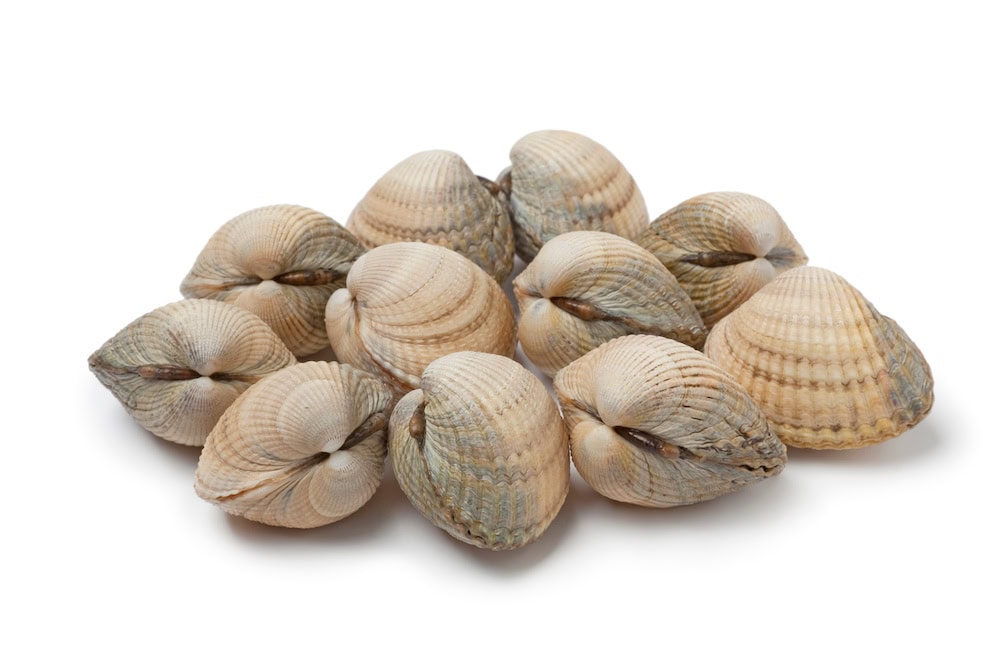
Cerastoderma edule
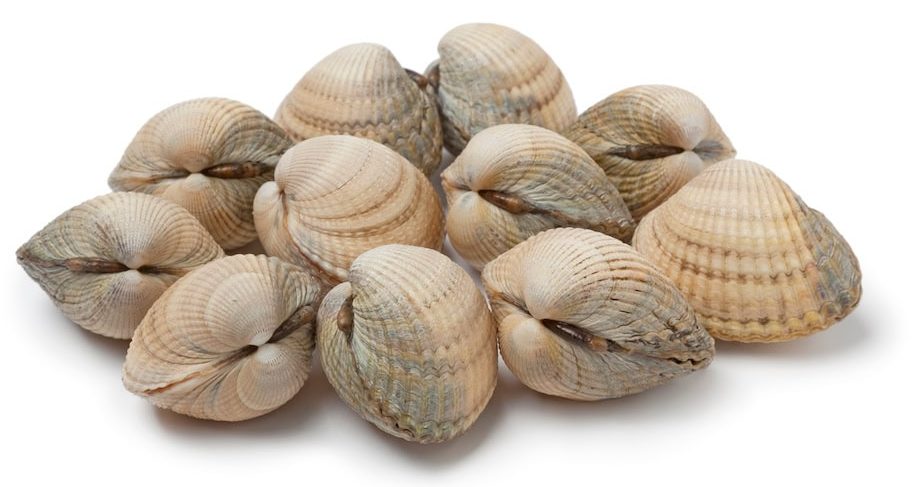
Found in estuaries and bays around the coasts of Britain and Ireland, the common cockle is a traditional seaside favourite. It has a rounded, domed shell with radiating ridges, and is off-white, yellowish or brown in colour. Cockles are usually about 3cm (11/4in) long but can reach up to 5cm (2in). They are good in hearty dishes, in salads or as a starter with a simple dressing. We source only hand-gathered cockles rather than those harvested using a suction dredge. Like all our molluscs, our cockles come from Grade ‘A’ certified beds and are fully traceable.
We supply Live (also frozen cooked cockle meat)
Best season September– April
Texture and taste Smooth flesh can be slightly gritty, the flavour is sweet but mild
Alternatives Palourde clams
Cerastoderma edule
Found in estuaries and bays around the coasts of Britain and Ireland, the common cockle is a traditional seaside favourite. It has a rounded, domed shell with radiating ridges, and is off-white, yellowish or brown in colour. Cockles are usually about 3cm (11/4in) long but can reach up to 5cm (2in). They are good in hearty dishes, in salads or as a starter with a simple dressing. We source only hand-gathered cockles rather than those harvested using a suction dredge. Like all our molluscs, our cockles come from Grade ‘A’ certified beds and are fully traceable.
We supply Live (also frozen cooked cockle meat)
Best season September– April
Texture and taste Smooth flesh can be slightly gritty, the flavour is sweet but mild
Alternatives Palourde clams
Wild or farmed
Wild, caught at sea
Origin and catch area
South coast (mainly Poole), Northeast Atlantic
Catch method
Dredged
Wild or farmed
Wild, caught at sea
Origin and catch area
Devon/Cornwall, Northeast Atlantic
Catch method
Pots and traps
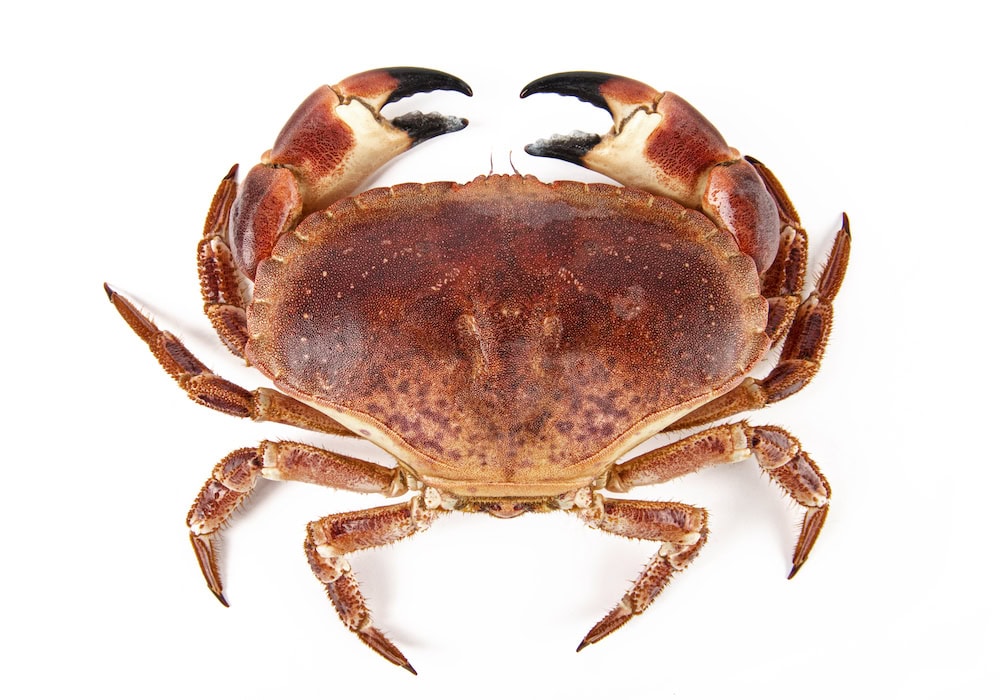
Cancer pagurus/Portunus pelagicus
A perennial favourite, the brown crab lives on the seabed around the UK coast. We source whole live brown crabs, both cocks and hens, from Devon and Cornwall. Male crabs are prized for their large claws containing sweet, succulent white meat. The hens have smaller claws and contain more brown meat (from the main shell cavity), so are usually less expensive. We also supply a range of white and brown crabmeat from Devon and Cornwall, including both fresh and pasteurised handpicked meat.
For a more economical, long-life product, we also import white meat from the Asian blue swimmer crab, which is ideal for including as an ingredient in crab cakes, soups and dips.
We supply Live hen crab (500g–1kg), live cock crab (800g–1.2kg, 1.3kg+), dressed crab (160g)
Crab meat from Devon/Cornwall: fresh handpicked white meat, pasteurised white meat, pasteurised brown meat
Crab meat from blue swimmer crab: white pasteurised crabmeat
(Also frozen 50/50 white and brown crabmeat and frozen crab shells)
Best season March–December (brown crab), year round (blue swimmer crabmeat)
Texture and taste White crabmeat: sweet flavour and crumbly texture that falls apart in the mouth; brown crabmeat: tangy, rich flavour and creamy texture, making it good for sauces
Alternatives For white meat: prawns, scallops and lobster
Cancer pagurus/Portunus pelagicus
A perennial favourite, the brown crab lives on the seabed around the UK coast. We source whole live brown crabs, both cocks and hens, from Devon and Cornwall. Male crabs are prized for their large claws containing sweet, succulent white meat. The hens have smaller claws and contain more brown meat (from the main shell cavity), so are usually less expensive. We also supply a range of white and brown crabmeat from Devon and Cornwall, including both fresh and pasteurised handpicked meat.
For a more economical, long-life product, we also import white meat from the Asian blue swimmer crab, which is ideal for including as an ingredient in crab cakes, soups and dips.
We supply Live hen crab (500g–1kg), live cock crab (800g–1.2kg, 1.3kg+), dressed crab (160g)
Crab meat from Devon/Cornwall: fresh handpicked white meat, pasteurised white meat, pasteurised brown meat
Crab meat from blue swimmer crab: white pasteurised crabmeat
(Also frozen 50/50 white and brown crabmeat and frozen crab shells)
Best season March–December (brown crab), year round (blue swimmer crabmeat)
Texture and taste White crabmeat: sweet flavour and crumbly texture that falls apart in the mouth; brown crabmeat: tangy, rich flavour and creamy texture, making it good for sauces
Alternatives For white meat: prawns, scallops and lobster
Wild or farmed
Wild, caught at sea
Origin and catch area
Devon/Cornwall, Northeast Atlantic
Catch method
Pots and traps
Wild or farmed
Wild, caught at sea
Origin and catch area
Scotland, Northeast Atlantic
Catch method
Creel-caught/trawled
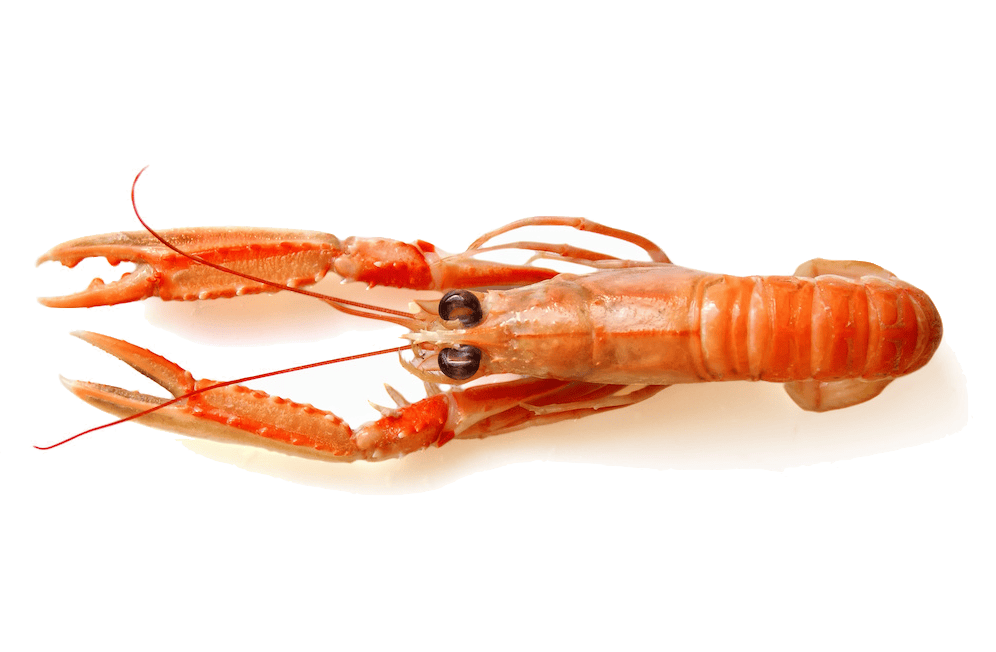
Nephrops norvegicus
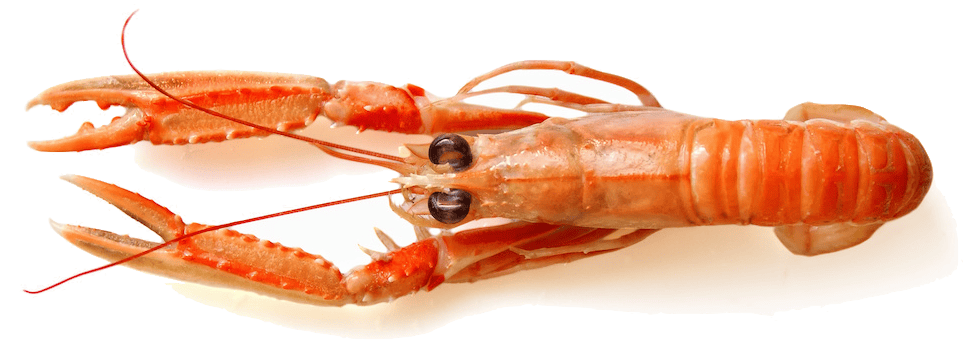
Also known as Dublin Bay prawn, scampi or Norway lobster, the langoustine resembles a large prawn, but it has tiny claws and is more closely related to lobster. Traditionally, most langoustine caught around the British Isles were exported to France and the Mediterranean, where its sweet, tender meat has long been considered a delicacy. In recent years, it has become more popular in the UK. Langoustines are very variable in size but are typically 13–25cm (5–10in) long, including the tail and claws. All our langoustines are caught around Scotland.
We supply Live (also frozen shell-on langoustines and frozen peeled scampi)
Best season October–April
Texture and taste Meaty texture and sweet flavour, like lobster
Alternatives King prawns
Nephrops norvegicus
Also known as Dublin Bay prawn, scampi or Norway lobster, the langoustine resembles a large prawn, but it has tiny claws and is more closely related to lobster. Traditionally, most langoustine caught around the British Isles were exported to France and the Mediterranean, where its sweet, tender meat has long been considered a delicacy. In recent years, it has become more popular in the UK. Langoustines are very variable in size but are typically 13–25cm (5–10in) long, including the tail and claws. All our langoustines are caught around Scotland.
We supply Live (also frozen shell-on langoustines and frozen peeled scampi)
Best season October–April
Texture and taste Meaty texture and sweet flavour, like lobster
Alternatives King prawns
Wild or farmed
Wild, caught at sea
Origin and catch area
Scotland, Northeast Atlantic
Catch method
Creel-caught/trawled
Wild or farmed
Wild, caught at sea
Origin and catch area
UK, mainly Cornwall, Northeast Atlantic (European lobster); USA or Canada (American lobster)
Catch method
Pots and traps
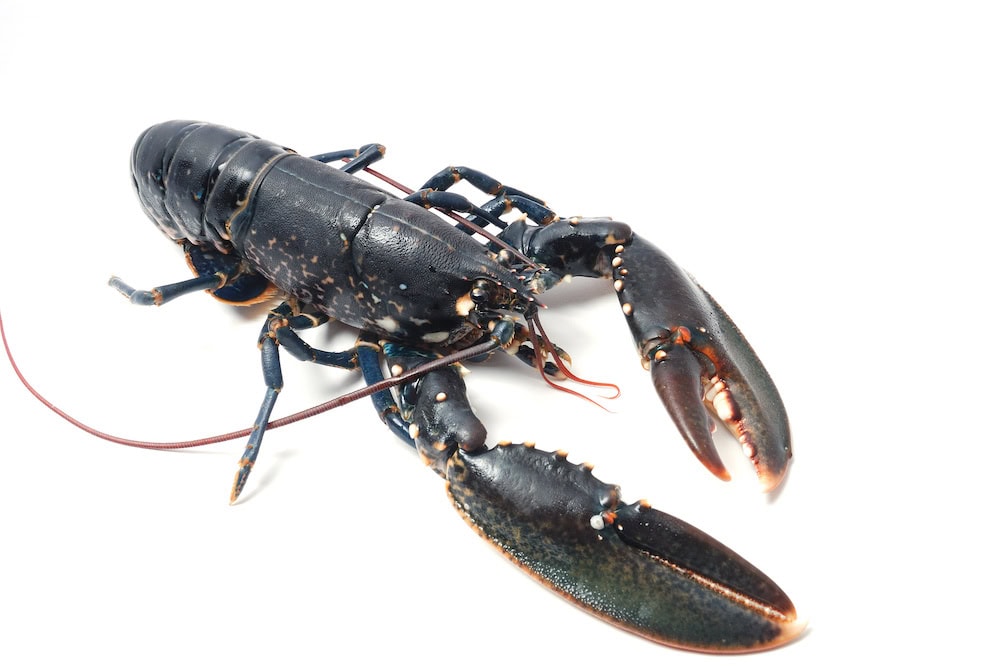
Homarus gammarus/H. americanus
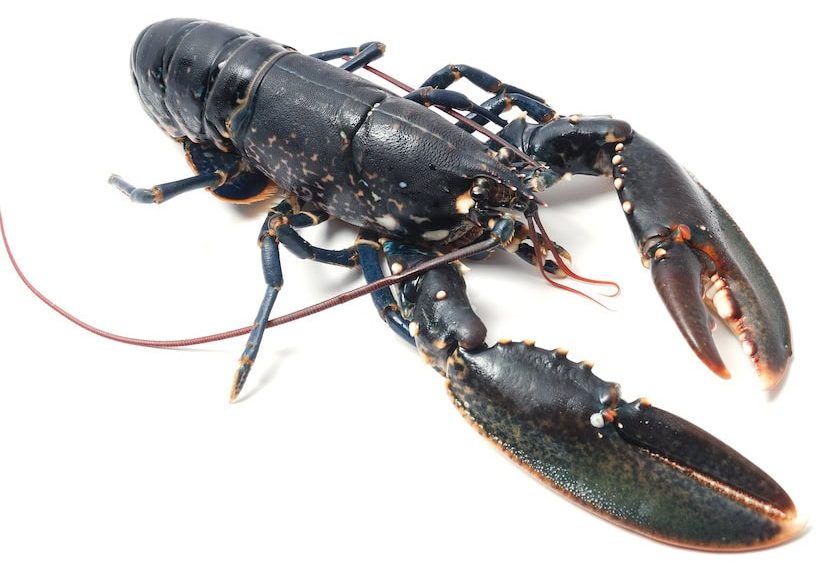
The favourite food of many seafood aficionados, the European lobster (shown here) is a clawed species with sweet, dense, succulent meat. We source our UK lobsters mainly along the Cornish coast, where they are caught using traditional lobster pots. We also supply the very similar American lobster, sometimes known as the Atlantic or Maine lobster, which is more abundant and less expensive than the Cornish native at certain times of the year and is caught in the same way. We supply both types live, with strongly banded claws to make them easier to handle.
We supply Live (also frozen raw lobster tails and frozen cooked lobster meat)
Best season European: March–September; American: year round
Texture and taste Firm, meaty texture and delicate, sweet flavour
Alternatives Monkfish, crayfish, crab
Homarus gammarus/H. americanus
The favourite food of many seafood aficionados, the European lobster (shown here) is a clawed species with sweet, dense, succulent meat. We source our UK lobsters mainly along the Cornish coast, where they are caught using traditional lobster pots. We also supply the very similar American lobster, sometimes known as the Atlantic or Maine lobster, which is more abundant and less expensive than the Cornish native at certain times of the year and is caught in the same way. We supply both types live, with strongly banded claws to make them easier to handle.
We supply Live (also frozen raw lobster tails and frozen cooked lobster meat)
Best season European: March–September; American: year round
Texture and taste Firm, meaty texture and delicate, sweet flavour
Alternatives Monkfish, crayfish, crab
Wild or farmed
Wild, caught at sea
Origin and catch area
UK, mainly Cornwall, Northeast Atlantic (European lobster); USA or Canada (American lobster)
Catch method
Pots and traps
Wild or farmed
Responsibly farmed
Origin and catch area
Shetland, Northeast Atlantic
Catch method
Harvested
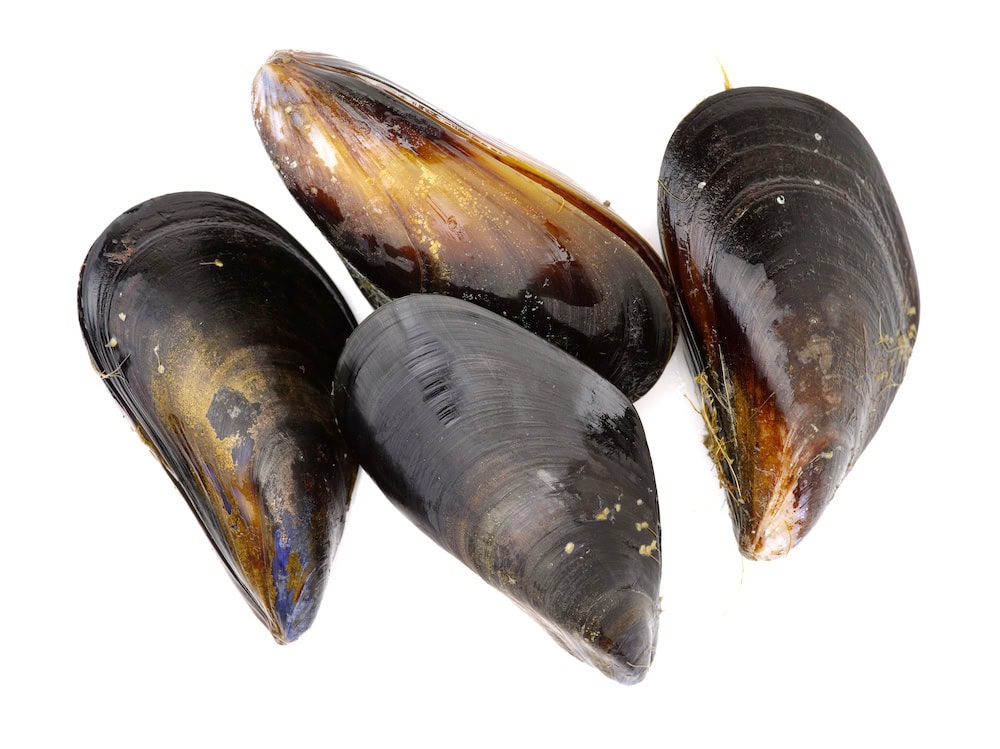
Mytilus edulis
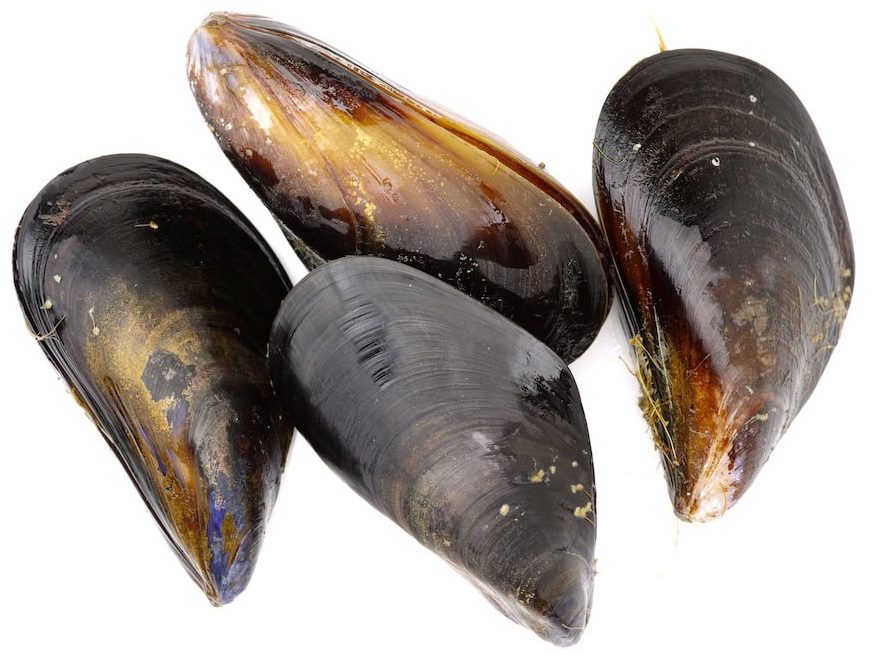
One of the most sustainable seafoods available, mussels are a superb, inexpensive, reliable option for your menus. We sell responsibly farmed, rope-grown mussels from Shetland, as they thrive in cold northern waters. The mussels attach themselves to rope by the strong thread called the byssus thread (or ‘beard’), which they produce on secretion of a protein, and they require minimal preparation. Like all our molluscs, our mussels come from Grade ‘A’ certified beds and are fully traceable.
We supply Live (also frozen mussels in the shell, frozen Greenlip mussels in the half-shell and frozen cooked mussel meat)
Best season September–April
Texture and taste Soft and velvety yet slightly chewy texture and an intense salty flavour reminiscent of the sea
Alternatives Clams, cockles
Mytilus edulis
One of the most sustainable seafoods available, mussels are a superb, inexpensive, reliable option for your menus. We sell responsibly farmed, rope-grown mussels from Shetland, as they thrive in cold northern waters. The mussels attach themselves to rope by the strong thread called the byssus thread (or ‘beard’), which they produce on secretion of a protein, and they require minimal preparation. Like all our molluscs, our mussels come from Grade ‘A’ certified beds and are fully traceable.
We supply Live (also frozen mussels in the shell, frozen Greenlip mussels in the half-shell and frozen cooked mussel meat)
Best season September–April
Texture and taste Soft and velvety yet slightly chewy texture and an intense salty flavour reminiscent of the sea
Alternatives Clams, cockles
Wild or farmed
Responsibly farmed
Origin and catch area
Shetland, Northeast Atlantic
Catch method
Harvested
Wild or farmed
Responsibly farmed (rock oysters); wild, caught at sea (native oysters)
Origin and catch area
Responsibly farmed in Essex, Ireland, Scotland (rock oysters); Northeast Atlantic (native oysters)
Catch method
Harvested; dredged using traditional methods
Ostreidae
The essence of the sea in edible form, raw oysters are the ultimate luxury seafood, whether served on their own – au naturel or simply dressed – or as part of a seafood platter. We mainly supply rock oysters (Crassostrea gigas), which were introduced to Britain in 1890 from Japan as a response to declining native stocks and are by far the most prevalent type in UK restaurants. We can also source native oysters (Ostrea edulis) to order when in season, although they are twice the price of rock oysters. The rock oyster tends to be more elongated and has a frillier shell than the native species.
Since oysters harvested in different waters differ subtly in flavour, we offer a range of rock oysters from around the British Isles, including Maldon and West Mersea (Essex), Carlingford (Ireland) and Cumbrae or Loch Fyne (Scotland). Like wine-tasting, oyster-tasting is an art, with many gourmet terms for the various flavours.
As with all our molluscs, our oysters come from Grade ‘A’ certified beds and are fully traceable.
We supply Live (also frozen raw oyster meat)
Best season Native oysters: September–April (unavailable in May–August); rock oysters: year round
Texture and taste Silky, smooth texture and varied flavours, including briny, nutty, tangy, grassy, coppery, fruity, sweet, crisp, metallic or earthy
Alternatives N/A

Ostreidae
The essence of the sea in edible form, raw oysters are the ultimate luxury seafood, whether served on their own – au naturel or simply dressed – or as part of a seafood platter. We mainly supply rock oysters (Crassostrea gigas), which were introduced to Britain in 1890 from Japan as a response to declining native stocks and are by far the most prevalent type in UK restaurants. We can also source native oysters (Ostrea edulis) to order when in season, although they are twice the price of rock oysters. The rock oyster tends to be more elongated and has a frillier shell than the native species.
Since oysters harvested in different waters differ subtly in flavour, we offer a range of rock oysters from around the British Isles, including Maldon and West Mersea (Essex), Carlingford (Ireland) and Cumbrae or Loch Fyne (Scotland). Like wine-tasting, oyster-tasting is an art, with many gourmet terms for the various flavours.
As with all our molluscs, our oysters come from Grade ‘A’ certified beds and are fully traceable.
We supply Live (also frozen raw oyster meat)
Best season Native oysters: September–April (unavailable in May–August); rock oysters: year round
Texture and taste Silky, smooth texture and varied flavours, including briny, nutty, tangy, grassy, coppery, fruity, sweet, crisp, metallic or earthy
Alternatives N/A
Wild or farmed
Responsibly farmed (rock oysters); wild, caught at sea (native oysters)
Origin and catch area
Responsibly farmed in Essex, Ireland, Scotland (rock oysters); Northeast Atlantic (native oysters)
Catch method
Harvested; dredged using traditional methods

Wild or farmed
Wild, caught at sea
Origin and catch area
Dorset (mainly Poole), Northeast Atlantic
Catch method
Dredged
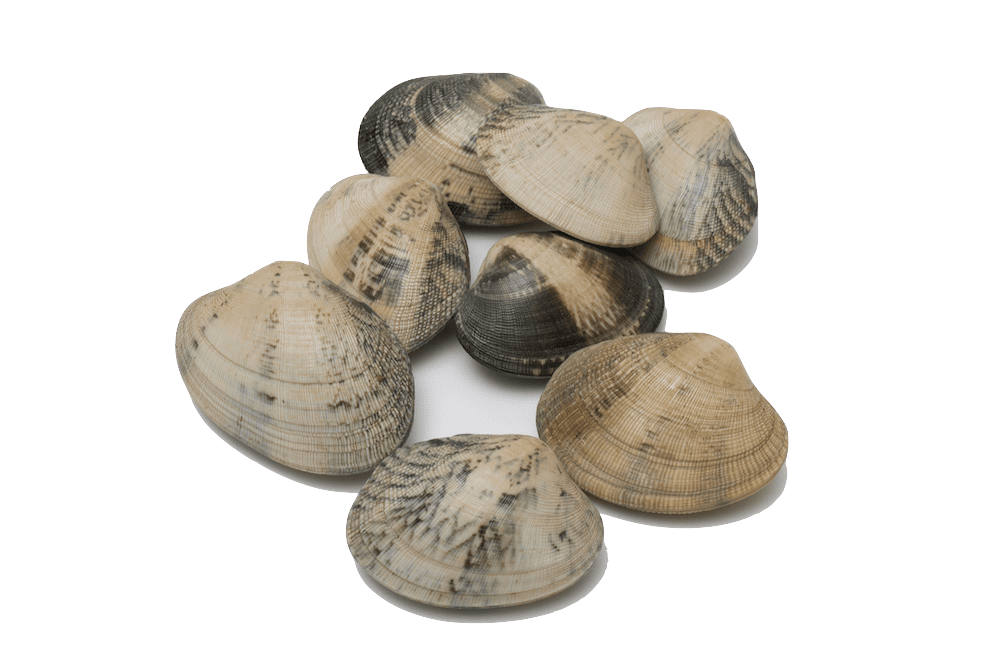
Ruditapes decussatus
Also known as carpetshell clams or Dorset clams, palourde clams have a hard, tough shell. Tasting of the sea, they are considered the best clam variety and therefore command a higher price than other clams. They are available all year, but best in the colder months, and are often used in vongole or clam linguine. Like all our molluscs, our clams come from Grade ‘A’ certified beds and are fully traceable.
We supply Live (also frozen clam meat and frozen clams in the shell)
Best season Year round
Texture and taste Slightly chewy texture and a fresh, salty flavour with a hint of sweetness
Alternatives Cockles, mussels, razor clams
Ruditapes decussatus
Also known as carpetshell clams or Dorset clams, palourde clams have a hard, tough shell. Tasting of the sea, they are considered the best clam variety and therefore command a higher price than other clams. They are available all year, but best in the colder months, and are often used in vongole or clam linguine. Like all our molluscs, our clams come from Grade ‘A’ certified beds and are fully traceable.
We supply Live (also frozen clam meat and frozen clams in the shell)
Best season Year round
Texture and taste Slightly chewy texture and a fresh, salty flavour with a hint of sweetness
Alternatives Cockles, mussels, razor clams
Wild or farmed
Wild, caught at sea
Origin and catch area
Dorset (mainly Poole), Northeast Atlantic
Catch method
Dredged
Wild or farmed
Wild, caught at sea
Origin and catch area
Scotland, Northeast Atlantic
Catch method
Dredged
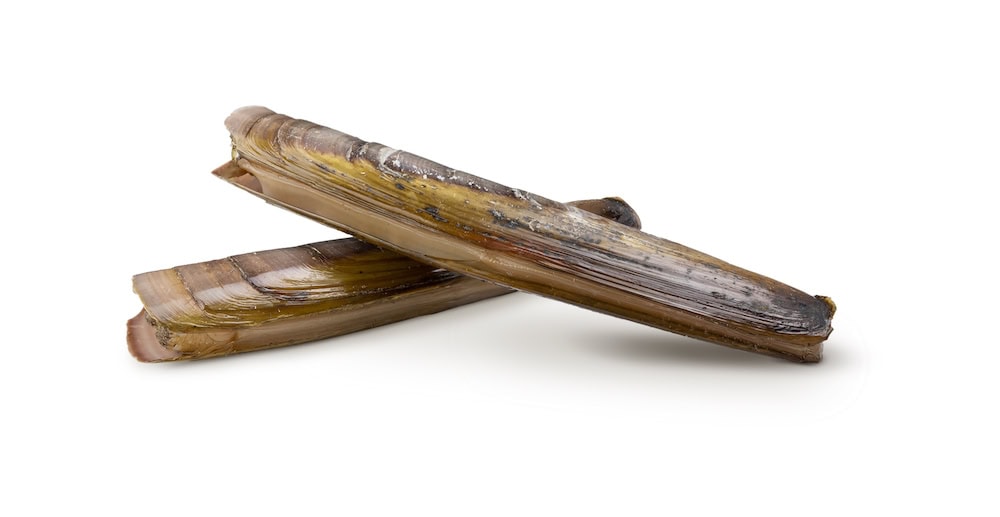
Ensis ensis
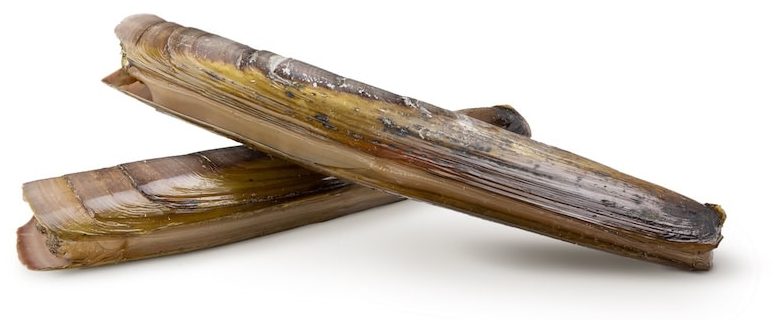
Named for its long, slender shell that resembles a straight razor blade and has a sharp edge, this clam has a very tender, melt-in-your-mouth texture and a sweet, delicate flavour a little like scallops with a hint of brininess. It is usually harvested at around 12cm (5in) and can be grilled, pan-fried, poached, steamed or stir-fried, or can be eaten raw in a ceviche. The whiter, softer meat is found at the tip of the clam, and the meat at the foot is chewier. The centre is slightly green and has a sweeter, shellfish-like taste. Like all our molluscs, our razor clams come from Grade ‘A’ certified beds and are fully traceable.
We supply Live
Best season October–April
Texture and taste Tender texture and a sweet flavour
Alternatives Cockles, mussels, Palourde clams
Ensis ensis
Named for its long, slender shell that resembles a straight razor blade and has a sharp edge, this clam has a very tender, melt-in-your-mouth texture and a sweet, delicate flavour a little like scallops with a hint of brininess. It is usually harvested at around 12cm (5in) and can be grilled, pan-fried, poached, steamed or stir-fried, or can be eaten raw in a ceviche. The whiter, softer meat is found at the tip of the clam, and the meat at the foot is chewier. The centre is slightly green and has a sweeter, shellfish-like taste. Like all our molluscs, our razor clams come from Grade ‘A’ certified beds and are fully traceable.
We supply Live
Best season October–April
Texture and taste Tender texture and a sweet flavour
Alternatives Cockles, mussels, Palourde clams
Wild or farmed
Wild, caught at sea
Origin and catch area
Scotland, Northeast Atlantic
Catch method
Dredged
Wild or farmed
Wild, caught at sea
Origin and catch area
Scotland/Shetland/Orkneys, sometimes Cornwall, Northeast Atlantic
Catch method
Hand-dived/dredges
Pecten maximus
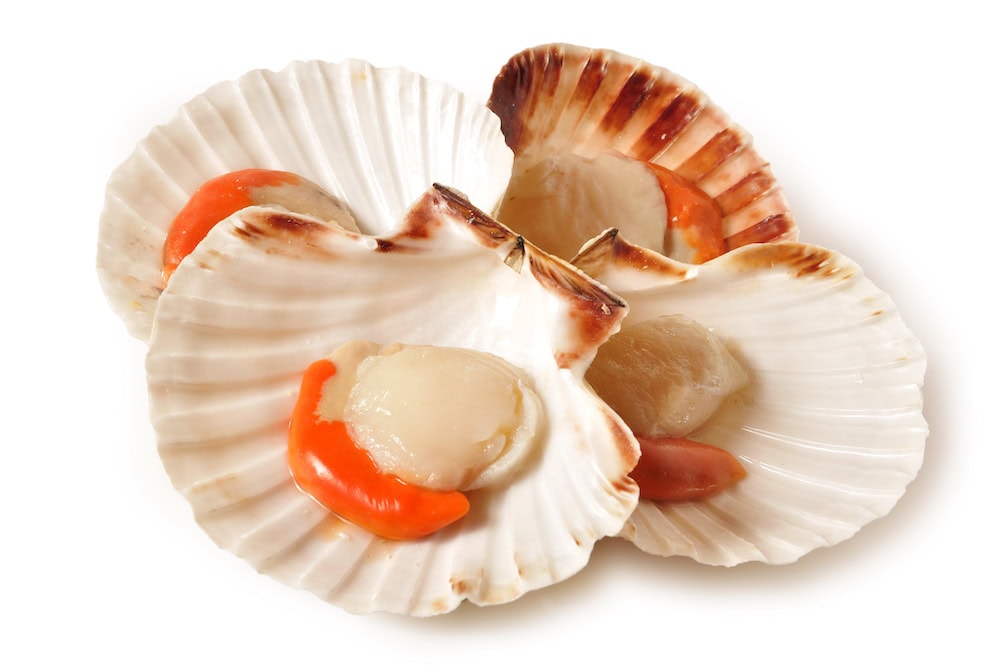
Juicy and succulent, scallops are an extremely popular luxury shellfish that we source primarily from the colder waters around Scotland, the Shetland Islands and the Orkneys. The main part of the scallop that is eaten is the sweet, succulent adductor muscle, which allows the shell to open and close, giving the scallop mobility. We supply live king scallops in their shell with the roe, including hand-dived scallops, which are superior in texture and flavour as well as being the most sustainable catch method. In addition, we supply fresh scallop meat in tubs, with or without the roe. Like all our molluscs, our scallops come from Grade ‘A’ certified beds and are fully traceable.
We supply Live in shell (with roe), fresh scallop meat in tubs (with and without roe), cleaned scallop shells (also frozen scallops, with or without roe, and refreshed roeless scallops)
Best season September–April
Texture and taste Tender with a sweet flavour
Alternatives N/A
Pecten maximus
Juicy and succulent, scallops are an extremely popular luxury shellfish that we source primarily from the colder waters around Scotland, the Shetland Islands and the Orkneys. The main part of the scallop that is eaten is the sweet, succulent adductor muscle, which allows the shell to open and close, giving the scallop mobility. We supply live king scallops in their shell with the roe, including hand-dived scallops, which are superior in texture and flavour as well as being the most sustainable catch method. In addition, we supply fresh scallop meat in tubs, with or without the roe. Like all our molluscs, our scallops come from Grade ‘A’ certified beds and are fully traceable.
We supply Live in shell (with roe), fresh scallop meat in tubs (with and without roe), cleaned scallop shells (also frozen scallops, with or without roe, and refreshed roeless scallops)
Best season September–April
Texture and taste Tender with a sweet flavour
Alternatives N/A
Wild or farmed
Wild, caught at sea
Origin and catch area
Scotland/Shetland/Orkneys, sometimes Cornwall, Northeast Atlantic
Catch method
Hand-dived/dredges
Wild or farmed
Wild, caught at sea
Origin and catch area
Devon/Cornwall, Northeast Atlantic
Catch method
Otter trawl/jig
Loligo vulgaris
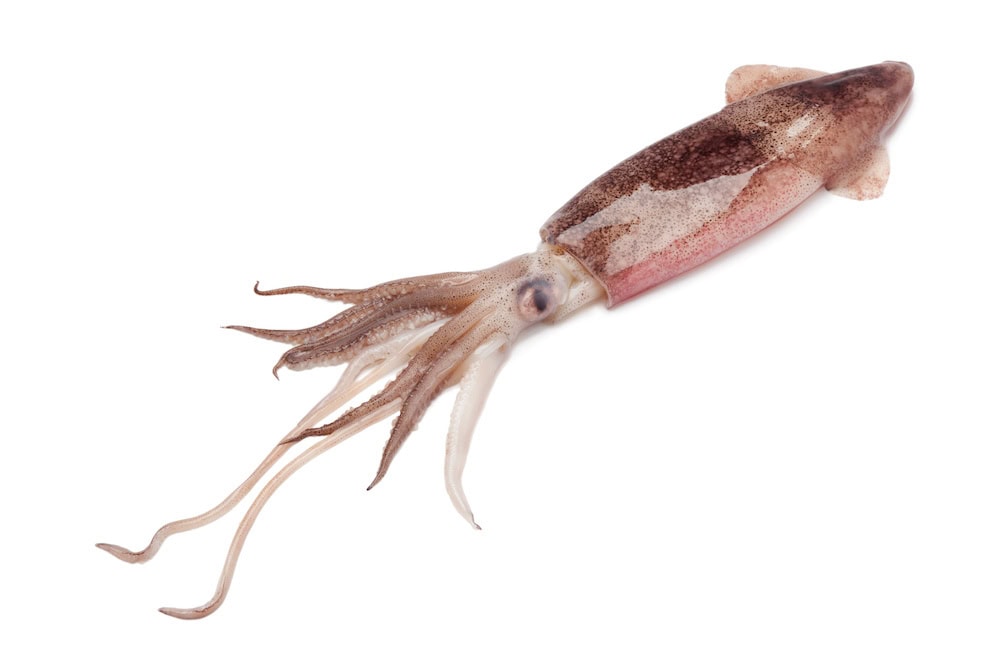
Also known as calamari or ink fish, squid is possibly the world’s most popular seafood. They range greatly in size, from baby squid measuring 2cm (3/4in) [EMMA fraction] to large squid up to 80–90cm (31–35cm) long. The size of squid will determine the cooking method.
Squid is made up of a long, tubular body (once prepared, it is called a ‘tube’), which is flanked by wing-like fins. The fins are tough and are best finely sliced and stir fried or used in fish stock. The live squid is covered in a mottled membrane, which needs to be removed and reserved for stock, as it toughens and shrinks around the flesh when cooked. Attached to the head are 10 tentacles – two long and eight smaller ones. In the centre of the tentacles is the hard ‘beak’, or mouthpiece. The ink is contained in a small silver ink sack in the tube. It should be removed before cooking, together with the internal shell (or ‘pen’), which runs up the middle of the squid.
Size Typically 7.5–10cm (3–4in) long
We supply Whole squid: 100–400g (also frozen squid in various forms, squid ink sachets)
Best season August–January
Texture and taste Tender, mellow and slightly chewy with a mildly sweet, briny flavour
Alternatives Octopus, baby cuttlefish
Loligo vulgaris
Also known as calamari or ink fish, squid is possibly the world’s most popular seafood. They range greatly in size, from baby squid measuring 2cm (3/4in) [EMMA fraction] to large squid up to 80–90cm (31–35cm) long. The size of squid will determine the cooking method.
Squid is made up of a long, tubular body (once prepared, it is called a ‘tube’), which is flanked by wing-like fins. The fins are tough and are best finely sliced and stir fried or used in fish stock. The live squid is covered in a mottled membrane, which needs to be removed and reserved for stock, as it toughens and shrinks around the flesh when cooked. Attached to the head are 10 tentacles – two long and eight smaller ones. In the centre of the tentacles is the hard ‘beak’, or mouthpiece. The ink is contained in a small silver ink sack in the tube. It should be removed before cooking, together with the internal shell (or ‘pen’), which runs up the middle of the squid.
Size Typically 7.5–10cm (3–4in) long
We supply Whole squid: 100–400g (also frozen squid in various forms, squid ink sachets)
Best season August–January
Texture and taste Tender, mellow and slightly chewy with a mildly sweet, briny flavour
Alternatives Octopus, baby cuttlefish
Wild or farmed
Wild, caught at sea
Origin and catch area
Devon/Cornwall, Northeast Atlantic
Catch method
Otter trawl/jig
Wild or farmed
Wild, caught at sea
Origin and catch area
Devon/Cornwall, Northeast Atlantic
Catch method
Creel-caught
Buccinum undatum
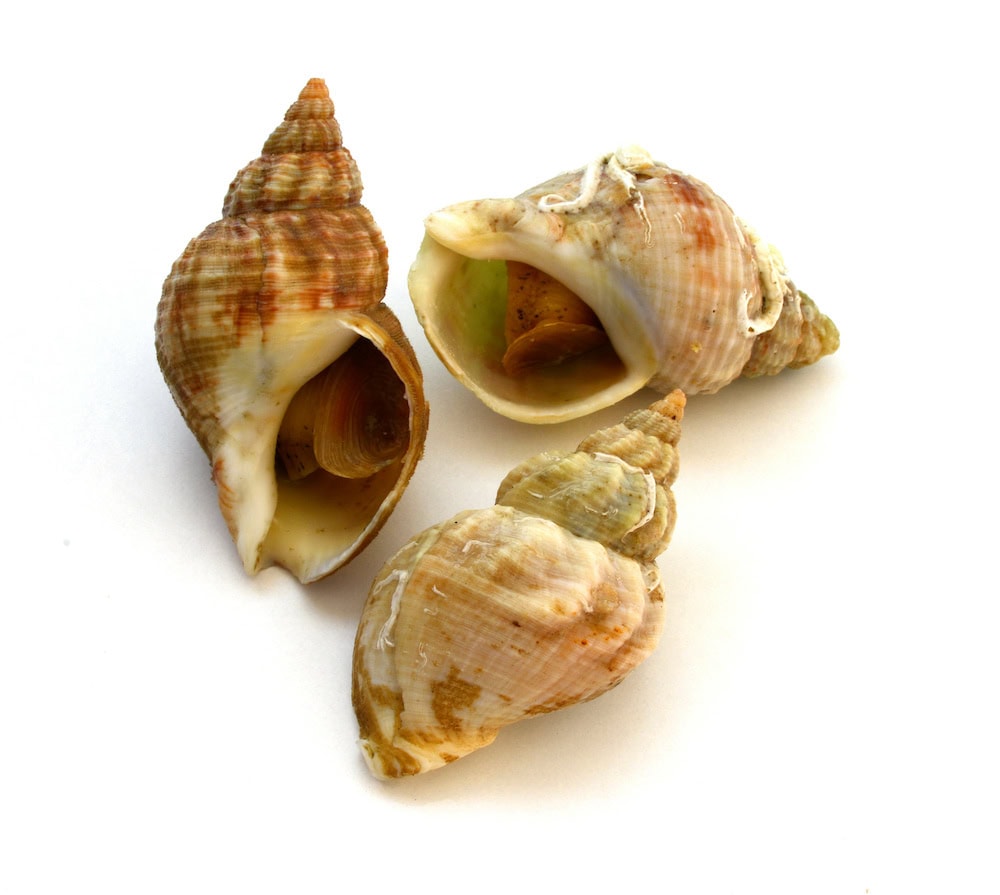
A type of sea snail with a tapered, spiral shell, the common northern whelk was once a British favourite, sold at the seaside and from wheelbarrows in London in Victorian times. They are about 5–10cm (2–4in) long and have a salty, seafood taste, similar to clams, but with a hint of sweetness, like lobster. Whelks have long been very underrated in the UK, and they are exported in vast numbers to the Far East, particularly Korea, where they are considered a delicacy. However, a raised awareness of the importance of sourcing local food means whelks are making a comeback in Britain.
We supply Live (also frozen cooked whelk meat)
Best season March–September
Texture and taste Tender, firm and chewy with a salty yet slightly sweet taste
Alternatives Clams, cockles, mussels
Buccinum undatum
A type of sea snail with a tapered, spiral shell, the common northern whelk was once a British favourite, sold at the seaside and from wheelbarrows in London in Victorian times. They are about 5–10cm (2–4in) long and have a salty, seafood taste, similar to clams, but with a hint of sweetness, like lobster. Whelks have long been very underrated in the UK, and they are exported in vast numbers to the Far East, particularly Korea, where they are considered a delicacy. However, a raised awareness of the importance of sourcing local food means whelks are making a comeback in Britain.
We supply Live (also frozen cooked whelk meat)
Best season March–September
Texture and taste Tender, firm and chewy with a salty yet slightly sweet taste
Alternatives Clams, cockles, mussels
Wild or farmed
Wild, caught at sea
Origin and catch area
Devon/Cornwall, Northeast Atlantic
Catch method
Creel-caught